
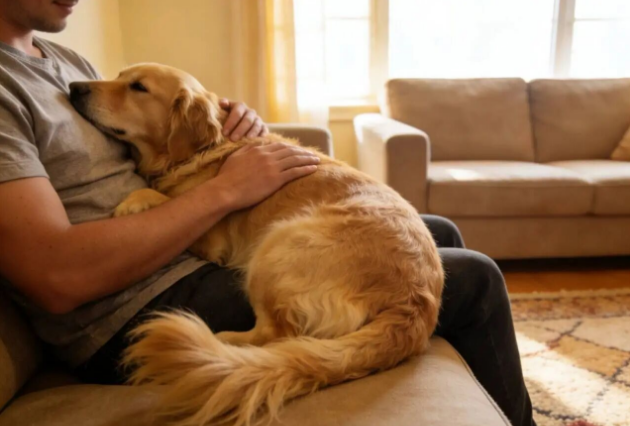
Many people wonder: Why are dogs so attached to their owners?
Does it truly love you,
or is it simply because dogs are naturally social animals that can’t live without companions? There’s actually no black-and-white answer to this question.
But I can tell you this with certainty—
A dog’s attachment to humans is neither feigned nor merely instinctive. Let’s break it down step by step.
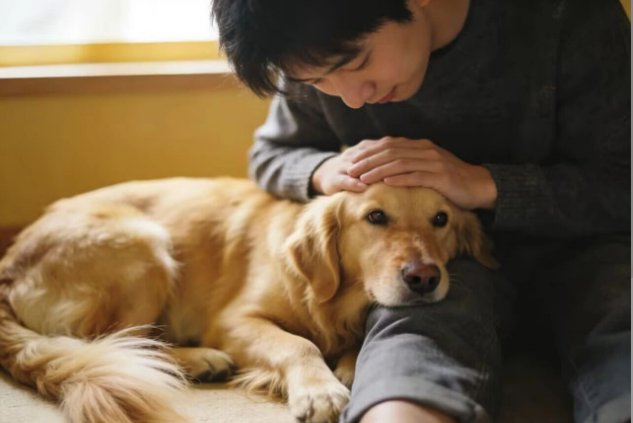
Let’s start with a point that’s often misunderstood.
When people talk about a dog’s attachment, many say:
“Dogs are descended from wolves and are naturally inclined to follow a leader.” This isn’t wrong, but it’s too simplistic. Dogs do indeed come from wolves,
and canids are indeed typically pack animals.
They need a pack, they need connection, and they need to cooperate with one another to survive. But the thing is—
dogs are no longer wolves. Tens of thousands of years of domestication have brought about a very significant change in dogs’ “pack behavior.”
They haven’t lost their instincts;
rather, they’ve transferred those instincts to humans.
In my training and care work, I often tell owners:
Dogs don’t stay close to you because you’re dominant, but because you make them feel secure. If it were simply a matter of “dominance,”
then dogs should be most attached to the person in the household who is the meanest, loudest, and strictest.
But the reality is exactly the opposite. The person a dog truly sticks to
is often the one who is emotionally stable, responds gently, and is sensitive to the dog’s feelings. What does this tell us? It shows that a dog’s attachment
no longer follows the “submission to the strongest” logic of a wolf pack.
What the dog is choosing is a source of security.
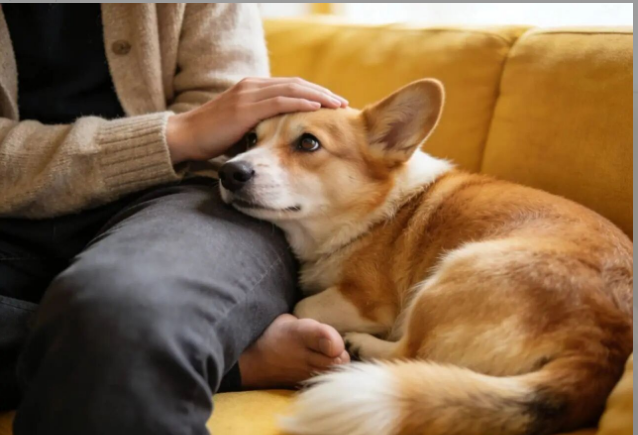
So why are some dogs more attached to certain people?
You’ve probably seen this before:
Even though the whole family owns the dog,
it only follows one person. That person isn’t necessarily the one who feeds it the most,
nor are they the strictest or the most “authoritative.” But they share one common trait—
they make the dog feel “stable.” A dog’s attachment to a person is, at its core, an emotional judgment.
It will instinctively gravitate toward the person who: doesn’t switch between hot and cold, doesn’t have sudden outbursts, behaves predictably, and responds to its cues. In a dog’s mind:
Stability = Safety = Reliability. That’s why it follows you, watches you, waits for you, and sticks close to you.
This isn’t weakness—
it’s trust.
A dog’s attachment is a form of “relationship validation”
Many people think
dogs cling to their owners because they “can’t live without them.” But from a behavioral perspective,
a more accurate way to put it is—
dogs are constantly checking to see if the bond is strong. When you walk away, they follow.
When you sit down, they snuggle up.
If you’re feeling down, it will come close, stay quiet, and watch you. This isn’t control;
it’s connection. In the world of pack animals,
a broken bond means danger.
So dogs repeatedly check in: “Are you still here?
Can I still rely on you?
Are we still a team?” Every time you respond,
you add a point of “security” in its heart.
So is that considered a relationship?
Yes, and it’s a very genuine bond. But it’s not the kind of complex emotional attachment found in humans;
rather, it’s a very pure form of attachment. To a dog,
you’re not “one of its own,”
but you are the most important presence in its world. You are: the one who provides food, the one who provides safety, the one who provides emotional support, and the one who provides a stable routine. Its attachment to you
is the result of long-term interaction—
it’s not an innate bond, nor is it blind obedience.
So, why are dogs so attached to you?
The answer is actually quite simple:
In its limited world,
you are the only one who is both reliable and willing to acknowledge its presence. It doesn’t need you to be perfect,
nor does it need you to play with it all the time;
it just needs a little acknowledgment when it seeks it. A single word, a glance, or a gentle stroke
can bring it peace of mind for a long time.
Finally, I want to tell you this: a dog’s attachment to you
isn’t a sign of weakness,
it isn’t a lack of security,
and it isn’t just because they’re naturally clingy. It’s a way of saying:
“I’ve checked, and you’re reliable.” So,
when they follow you, snuggle up to you, or watch you,
don’t get annoyed.
That’s its way of telling you—
I see you as my whole world.
Eric Jami


This article is exactly what I needed! Your insights are incredibly helpful.
I’m happy to hear you find value in my content. Thanks for your continued support!
You’ve changed the way I think about this topic. I appreciate your unique perspective.